Turning a serious hike into a casual stroll: Tiger Leaping Gorge.

Legend has it that a Tiger once took a giant jump and crossed the raging Yangtze river in southwest China to escape some other tigers that were hunting it. Modern tourist folklore says the gorge is the biggest in the world. It has snow-capped 5000m-plus peaks at its highest point and then it dips down into a ferocious murky-brown waterway that snakes its way through the dramatic mountains.
The Tiger Leaping Gorge hike is famous in China and for good reason. The scenery left me uncharacteristically speechless at times and I found the mountains uncrowded, peaceful.
It’s a trekkers nirvana.
According to the charismatic middle-aged Italian man at our hostel in Lijiang, about three-hours from the trekking start point, you can do the trek in one day, “if you’re strong enough.”
I barely consider myself strong enough to carry my backpack through an airport, so it was obvious that Tiger Leaping Gorge was going to be slightly more recreational for me.
Plus, I had the Swedes to consider. Their Viking heritage definitely makes them strong enough to turn the lengthy walk into a short, exuberant jog. But, their penchant for baijiu, a local white, rice spirit, bought them back into line with my less-than-vigorous walking intentions.
Our preparations for the trek were as serious as a goldfish planning its next loop around the bowl. Two Snickers bars, a small bottle of baijiu, some toilet paper and a dodgy local map were all we’d need to carry with us, plus, of course, our backpacks.
Most of the other serious trekkers thought ahead and stored their large packs at a guesthouse at the start of the trek for 10 cents or some ridiculously nominal amount of Yuan. I’d been harbouring some porter-guilt since I’d loaded up Manbahdur in Nepal on the way to Everest. Carrying 16 kgs on my back seemed a good way to alleviate that, plus it’d be better than an uncoordinated gym class.
The final preparation for the hike was to find a few spanking-looking Chinese speakers to accompany us. We cleverly enlisted Yong, a fluent-Mandarin-speaking Thai man with a contagious laugh. He then sought out Yan Yan, Summer and Tem, three young Chinese girls to make up the team.
We spent an unreasonable portion of time thinking up an opriginal name for our crew. After deliberations which rivalled the enthusiasm an alcoholic shows at a brewery tour, we decided we’d be uniquely called ‘The Best Group’. In the interests of flexibility, which is essential on a casual stroll, we interchanged this with ‘The Best Team’, but only on special occasions.
Everyone was committed to taking the trek very slowly and basking in the scenery.
We set of in a flurry of goofy-grin-and-peace-sign photographs like typical Chinese tourists and began out ascent into the mountains that ridge the gorge. There were innumerable photo sessions over the course of the stroll.
A raft of rice paddies and other crops stretched along the banks at the beginning of the trek, but our vista soon changed to rugged mountains which dramatically dropped into the river. I was blown away by the sceney and especially how it has changed as I’ve traversed some of the mighty China.
Our first stop, the Naxi guesthouse, showed us the innate brilliance of our planning. The Chinese girls ordered for us. Sure, that may seem like I’m boasting about finding a snack size packet of chips while starving, but it was a welcome change after the animal-noise-based charades we’d been playing with many Chinese menus.
We were also invited to see the chicken being killed before it was boiled to make our delicious soup.
It’s a morbid sensation, to look your food in the eye before you eat, but I was more disturbed that the lady cut the chicken’s neck and let it bleed into the stream in the exact spot where I’d washed my face just moments before. The incident reminded me that recently, I said to one of the Swedes as I balanced on a train toilet with just one thong, “I did not come to China to be clean.”
That attitude toward cleanliness definitely applies to the bulk of this stroll.The food, of course, was delightful and we tried a few things I probably would have skipped over ordinarily. They do amazing things with potatoes and spices over here.
As for the chicken, the local and international preferences were perfectly complementary. The Swedes and I enjoyed the thighs, breasts and wings, while the girls devoured the heart, liver, kidneys, feet and even the chicken’s head with an enthusiasm I usually reserve for Mexican food.
We continued up the hill with very contented stomachs.
Then, we met the 28 Bends. I’d seen this squiggle on the dodgy map and wondered what it meant. After the 17th corner I realised it was the gruelling track to the peak of the hike at 2670 metres.
Yong and Summer cleverly hired horses so they could prevent breaking out in a sweat, the ultimate sin on a short stroll.
I, however, was in strolling hell with 16 kilos pulling me backwards like a dessert bar drags my plate away from my best intentions when I’m full.
The view at the top made the huffing and puffing worthwhile. I loved seeing rice paddies in one direction and mountains all around, some beautifully laced in reflective snow.
We arrived at the Tea Horse, our first stop, elated with our efforts, especially the feeling of honest physical exhaustion. The Swedes, of course, tucked into some well-deserved Baijiu and we slept a happy night in a stunning place. Clotrhed in the mountainous silence, it is one the few times I have felt truly peaceful in China.
After the four-and-a-half hours of strolling on day one, day two needed to be reined in. We all indulged in a mountain-air-induced sleep-in before we strolled through the valley for almost two hours to the Half Way House. (Ok, it was more like 90 minutes, but watches were frowned upon on our stroll.) The view here was in-your-face; it forced you to enjoy the nature and feel far from home, far from civilisation.
The Swedes, clever Vikings that they are, packed a sub-woofer and some speakers in their pack, so The Best Group moonlighted as The Party Machine.
On night two we got to know each other on a beer-fuelled level. After one drink the Chinese girls were speaking better English than the average Australia. Their earlier shyness and mouth-covered giggles were replaced with calls of “you’re so handsome” to the Swedes and “you such a beautiful girl,” to me. I was touched to get to know them and their quirks so well.
It was a raging night, definitely more suited to a stroller than a serious trekker. Mostly, I loved that we’d all lost our inhibitions enough to sing songs to each other from our native country. The Swedes blew us away with a ballad about a frog, in true Thai-stlye Yong sang about an elephant, I mimicked a kangaroo and sang ‘it’s because I love you’ by the Master’s Apprentices and the Chinese ladies gave us a selection of folk, pop and, of course, their national anthem.
To me, that’s the beauty of a long, relaxed stroll; I learned so much about a bunch of strangers I would have ordinarily passed in the street like I’d dismiss a shoe-shiner when I’m wearing thongs.
In the morning we made our own fun. I clumsily led the crew through a series of yoga poses which felt great against the mountain backdrop. We made a little band with a few beer bottles banging against each other, I meditated a little, but, generally, we just talked and laughed. I felt very contented as the mountains over-awed me with their stature.
It felt damn fine to be back in the Himalayas.
And then, it got better.
After another glorious sleep-in and two laxadasical hours of strolling through pine forests, past a secluded temple and alongside a selection of water falls, we arrived at Tina’s Guest House, a charmless establishment just above some of the Yangtze’s major rapids.
We indulged in another Chinese-ordered feast and set about our night-time task of getting to know everyone just that little bit more intimately.
Yan Yan, our 22-year-old lightly-built Chinese companion, scoffed the Baijiu as if it was an electrolyte drink in a cholera outbreak. “I love this stuff,” she’d say after knocking back a shot of the 52% liquor.
I cleverly chose to chase my baijiu with green tea. “That’ll stop any pesky hangovers,” I thought, rather optimistically.
But, indeed, after a night of dancing and singing and sharing sneaky stories, I was feeling like I’d been hit by a pelaton.
A quick bowl of fried rice had me back on the trail and we descended to the spot where the mythical tiger leapt across the rocks. By this time I was feeling incredibly relaxed about the entire trek and decided a summer dress and thongs would be appropriate. I was wrong.
The stroll down to the river bank included a few expeptionally steep ladders and some impressive precipices. At the bottom, however, I could rock-hop easily towards the raging water.
The rapid was mesmerising. The strength of the water coursing through the narrow gorge (it was about 20 metres across here) was evident as it splashed up the rocks. I chilled out even more gaxing at the water as it remained suspended briefly above the tumultuous pool. The Best Group sat there for a good hour and watched the water move through at a pace far more speedy than our own. We were impressed, I reckon, with the sight of the river and knowing that we’d walked for days, soaking in the atmosphere, to get to that spot.
The satisfaction was palpable.
In total, we had taken four days and three nights to walk about two thirds of the trek. Yes, we did not even get to the end point. A local laughed at me when I proudly boasted of the achievement.
My patience levels are at an all-time high, I reckon.
I can hear the old Italian guy calling me lazy in my daydreams. I prefer to say I’m laid-back, obviously.
On reflection, I reckon the pleasure I found in Tiger Leaping Gorge is not about doing it so slowly, but it rests solidly with having companions to sing along with on the trail.
Sure, it’s a nice place, but without nice people to stroll with, they’re just mountains.

The best hangover cure.

The Kaya bar in Yangshuo touted $1.50 tequila shots and an ambiance that’d rival avocado-harvesting season in Mexico. A local bucks party was rocking on and the crew from my hostel were indulging in a rather wild Saturday night. Naturally, I joined the party.

I woke with a shock on Sunday morning at 8.45. I was supposed to meet some mates at 8 for my 9am Chinese calligraphy class.

I grabbed some coin and headed into town on my bicycle in last night’s dress, reeking of the previous night’s festivities. I’d missed breakfast, of course, so made do with a petite glass of water.

When the ambitious Aussie/French couple had asked me whether I was interested in learning to write Chinese characters with a brush and ink, I was immediately intrigued. I seized the opportunity, but did not anticipate I’d try to master the age-old art with a booze-riddled body.

I did not hold out much hope for the day, but I’d committed myself.

It started off well: with snacks and tea. Our teacher, Lucy, was a kind and generous soul. She sat us down and explained the materials we needed to write for the emperor. An ink stone, a brush, see-through paper and a steady hand was all we needed.

She explained the brush strokes as she was training a young pooch. “Sit, sit sit, sitting, sitting,” she’d say as she moved her brush with bamboozling precision.

Then it’d be “stand, stand, stand, standing,” as she increased the angle of her brush. Each stroke needs to be done a certain way.

I had little idea what was going on and that was obvious to Lucy. She’d try to be diplomatic. “Yes, you have a very interesting style,” she told me.

The others in the class were standing up to write, apparently this is the best position for holding the brush. I was slumped in my chair dreaming wistfully of fried rice and a rehydration sachet, piecing together the events from the previous night. What were the names of the Canadian folk I met, I wondered.

I gave it my best, determined to get my character perfect. We were prqactising fu or luck as it uses every stroke movement. Occasionally, I’d do something well, miraculously.

“Oh, well done. Yes, yes,” Lucy would say, delightedly and hold up my piece of paper for everyone to see. I felt like a kid who’d dressed themselves for the first time and basked in her approval. Still, it was a blur of splotches for me.

The other tutor would often shake her head and laugh at my attempts. Then when I’d do something that would have made the emperor proud, Lucy would gush. “You are improving so quickly.”

Her companion chimed in, “we are very surprised,” she nodded at me, her face grave and encouraging. Clearly, my potential at the beginning of the class lacked some lustre. Perhaps it was my un-brushed hair?

The surprising thing was how calming and meditative the activity was. Gradually, my hangover receded, but my hunger was like an elephant on heat, rampaging.

After we’d completed fu a few times and Lucy had helped me find my “own style – it’s more carefree,” we indulged in some reverse psychology bargaining. She wanted 60 yuan for the class. We insisted on giving her 80 each. Then we debated over who would pay for lunch. In the end a local school teacher shouted our group, as a welcome to the town.

We sat in her loft and drank tea after the class, snacking on dried flowers, taro, exceptionally strong ginger and other local snacks. It was a truly beautiful moment and a highligh, so far, of my China trip.

The local noodle shack she took us to had some strange-looking meat in the window. I thought it was lamb. No, it was goat. And it was delicious. Alongside the pale meat some cubed pieces of slippery red stuff had me confused. “What are those,” I asked, innocently. “Oh, that’s goat’s blood,” she replied, offhandedly.

It was delicious and immediately remedied my nausea.

I was impressed with the goat meal and told some of the folk from the Kaya bar about the strange food. Then, I recalled that we’d snacked on some street food as we marched home at 4am. “What did we eat,” I asked the Belgian and Swiss guys who’d walked me home.

“Oh yeah, you had a few sticks of snails.”

Snails, huh. I was impressed by my tequila-fuelled abandon, but completely revolted.

So, in one day I’d eaten snails, goat, goat’s blood and mastered one of the Chinese characters in my own new style. That’s what I call a good hangover day.

Waiting for the train.

I love a good reality check, especially when it comes at ten minutes after midnight on a Thursday night.
Last night, I was treated to a healthy dose of reality as I waited patiently for my sleeper train to take me to Yingtan, a stop-off en route to Guilin in the south of China.
I had been hanging out in Tunxi, near Mount Huangshan, with some lovely folk for a few dayts and I had got a little comfortable. One lovely Taiwanese lady, Lina, had been keeping me company with her perfect English. I’d been indulged with her insightful, fascinating conversation and even treated to her skills as a translator. It was heaven.
Then, just as it started to get nice and cosy, I upped and left, like a Aussie guy who thinks he might be in love. The road was calling.
It started with the taxi driver. He decided to round Y6.40 up to 7 Yuan. It took a good five minutes to figure that one out.
In the packed-out, human-odour-filled waiting room a young Chinese man struck up a brief conversation with me in English. This ain’t so bad, I thought.
His train and most of the waiting passengers left and I pulled out my book, ready to chill out. It was midnight, after all and I’d had a big day sampling different sorts of tofu.
But, peace alluded me and, instead, I was treated to a piece of modern-day Commedia del Arte.
A friendly-looking, pink-clad young Chinese woman excited beckoned me over. I obliged, lugging my backpack to sit opposite her and her companion (friend, sister, cousin, maid – I was not sure).
Naturally, she started chatting away, asking me all sorts of questions and confusing my blank face for comprehension. After a few minutes of her rapid-fire Chinese, my shy smile, combined with a head shake, brow crunch, silence and shoulder shrug eventually told her that I was understanding her as much as vegetarian understands a butcher.
She was crushed. Her shoulders slumped and her head drooped, for a few moments at least.
But it did not take long for her intuitive Chinese nature to take over and she was it again. Question after question poured out of her, alongside a million beautiful smiles. She was convinced, I’m sure, that if she said the words slowly and loudly enough, that I would understand. Does that sound a familiar tactic, I asked myself, guiltily.
So I sat there, pouring over my useless phrase book, looking like a complete fool and repeating the meagre words I knew. Mi fan (rice) and ce sor (toilet) – at least I think that’s what those words mean – did not really fit into the conversation. But, dua bu qi (sorry) was bandied about like bubble bath at a slip ‘n’ slide.
It was pretty funny, really, and it was certainly more amusing than my rather hard-core book about Chinese history.
There weren’t many people at the station, about 8, I reckon, but they were all crowded aroud like kids at a clown show.
I was definitely the clown.
My fellow passeners were smiling, adding their two-cents worth every few minutes and, of course, having a nice giggle at my expense.
Then, the conductors came over, three of them, and joined the circus. Of course, I couldn’t understand their Chinese either.
It started getting ridiculous when one of the ticket officers decided to display his considerable mime skills. He was jumping across the waiting room like some rabbit-cum-reindeer with an exceptionally goofy grin on his face.
I’m not sure if he was trying to mime a kangaroo for me, as I’d divulged that I was an Aussie, or whether he was trying to tell me that doing acrobatics with my heavy backpack would be difficult.
In any case, it was a real treat to see the conductor, decked out in his full uniform – complete with the train driver’s hat and blazer – take on the attributes of a jack-in-the-box.
After that wave of laughter had subsided, we were really in stitches at one point, the girls got straight back to their task: to tell me what they had been doing in Tunxi. The bought out the old let’s-show-her-in-writing-so-she-can-read-it-because-the-problem-is-clearly-her-lack-of-oral-skills trick. The Chinese business letter they whipped out for me to read, unsurprisingly, did not ease our mutual confusion. I can read the date, I thought, impressed with myself.
But, once again, I crushed their dreams.
And it was touching that they cared so much about continuing a conversation with a foreign stranger. It was short-lived, but I felt a breif sense of community with the folk at the station. I managed to learn the Chinese words for sister, name and tired, too, which was a bit of a boon.
I reckon it’s the absurdity of these sorts of situations that make them so memorable. It’s really not every Wednesday night you find yourself at a train station in rural China trying to understand the local dialect. For me, that’s the real brilliance of travelling alone and visiting exotic places. Climbing Mount Huangshan and road-testing stinky tofu are fascinating and thrilling experiences, but the ones that make you laugh and take you by surprise, they’re the real gems.
The never-ending game of Charades continues.

Conquering Mount Huangshan with the rest of ’em.

Imagine stepping back in time a few thousand years and going on a quest. Oh, there’s fun to be had tapping into that side of your imagination. You could find a few handy companions, a dodgy map and pack yourself some provisions. Then you’d set out to conquer an ancient mountain.

That’s what I did a few days ago, but with a little less ancient mystique and quite a few more Chinese people. And a couple of Norwegians.

Mount Huangshan is a good spot for such an expedition. It’s about a 6 hour bus-ride or 13 hours on a comfy train south of Shanghai. (Of course, I took the longer route.)

On this ancient mission you should not forget your wallet. You’ll need a fair bit of coin to survive on the mountain. Most notably, you’ll need to fork out 230 yuan to get in the gate.

All you have to do is find your way to the other side.

That means strapping up your boots at the Mercy Light Pavilion, climbing a few thousand steps to CelestialPeak, cresting LotusPeak on your way to the Heavenly Sea and then finally reaching the hotel at Bright-Top Peak. Then you can find the room that you’ll share with 20 others, includingh 17 friendly locals.

The Chinese have made this much easier by attaching concrete pathways to the side of the sheer cliffs on Huangshan. And the prehistoric mountain, with its exceptionally steep slopes and sharp granite outcrops, is as easy to navigate as a brand spanking shopping trolley.

In China, accessibility means people. The domestic tourists swarmed around the peaks like greenies at vulnerable old gum tree. They were ubiquitous. Many are wearing yellow hats that are themed for their special tour group and they follow their flag-waving, yelling-Chinese-into-the-microphone-so-the-people-in-Shanghai-can-hear-but-no-one-one-the-mountain-can-hear-their-own-footsteps guide fastidiously.

The Mandarin is like the buzz of your next-door neighbour’s lawnmower on a Sunday morning. It can be annoying, but you learn to tune out and both are non-negotiable.

The people were a mixed bag. Some charged up the hill, and it’s a bloody steep hill, as if there was a pot of gold at the top.

Others were less keen on the hiking and paid men to carry them up in chairs attached to bamboo poles.

In fact, the Chinese tourists came in many shapes and size, from the hard-core Adidas-shod athletes to the pretty ladies strolling up in Dior shirts, tight jeans and heels.

It was a strange sensation to be atop a stunning mountain, with peaks cascading upon each other all the way to the misty horizon, with thousands of other people.

I’m impressed by their enthusiasm for the outdoors and that they take the time to visit these places. On the flip side, it’s overwhelming. And it seems ironic to have a swanky four-star hotel in such a mystical place.

But, hey, that’s China. It’s modern and ancient, simultaneously.

The biggest surprise for me was that I already knew this place. It’s one of China’s most famous landmarks and features on many of their oriental paintings. It’s what I always imagined China to look like, but without the tourists and the cable cars.

Still, the mountain has myriad charms. The scenery is exceptional, especially at sunrise and sunset, and the place names are something else entirely.

On your way down the Huangshan you’ll need to keep Flying–Over Rock on your left as you head towards the Black Tiger Pine. The trick here is not to go to the White Goose Station, but instead go straight down to the CloudValleyTemple via the Scenery-Inviting Pavilion.

If you get lost, which I did, of course, you can make your way back to the Black Tiger Pine by the Beginning-to-BelievePeak and the Harp Pine. It’s best not to take the path to the Stone Monkey Watching the Sea. Instead you should take the sign to the North Sea.

Of course, if you were on an ancient quest there would probably be no signs and fewer tourists to ask advice from, but you should never let the facts get in the way of a good imagination.

Just another notebook.

As I was wandering around aimlessly a few nights ago I came across some hilarious Chinese notebooks. I only just managed to refrain from purchasing one, but could not resist sharing them.

This is a selection of the most inappropriate.

Not for all the tea in China.

I love a morning stroll. I especially love discovering new delicacies every morning for breakfast. There is one thing, however, that the Chinese do not do so well. It’s not a big surprise. I had been forewarned. But that doesn’t make it any easier.

It’s the coffee. It’s rubbish.

Even in the places it should be ok, it’s not.

But, this is all part of the China-detox I had been planning. Going without a morning latte is much easier when there is a smog-infused walk and ginger-flavoured candy on offer.

So far, I’ve also been keeping my dairy and cheese cravings at bay. Although, check-in with me in two months to see whether I’ve traded hiking for brie hunting.

Food aside, the best trade-off for coffee is, of course, tea.

And having a brew in China is like wearing a string bikini at Ipanema. It just feels right.

I’ve even invested in a little thermos, after seeing most of the population walking around with various shaped and coloured thermoses, all containing different types of tea.

I just love carrying the flagon around with me and stopping for a quick cuppa at every intersection.

And the looks I get from the locals, it’s like a daughter-in-law-to-be has just revealed to her future in-laws that she’s keen to have children as soon as possible after the wedding. I can feel their approval as they stare at me and trip over the chipped pavement.

Perhaps the best thing about my new pink flask is that it says “Childhood’s memory always tastes delicious,” on the side. I am always thinking that.

The tea is not super cheap, either. A few hundred grams of the nice jasmine brew I’m indulging in at the moment cost me the same as two plates of delicious dumplings. Choosing the leaves is quite the process, too. And a few leaves can be infused about five times by the hot water thermos that is conveniently located in the lobby. In fact, hot water is everywhere for your tea-drinking convenience.

But, despite all of the tea-leaf excitement, I still catch my mind wandering into the realms of lattes and Arabica beans at about 10am. At least I have my childhood memory, right.

Group photo

Greetings from Tunxi!
Here are a few snaps from my journey so far.
I love the enthusiasm people have shown for getting a photo with a Westerner. Mostly, as a single white girl, I am not attracting too much attention, but it does raise a few eyebrows.
This is a selection of some of the best group shots. It makes me very happy to be welcomed like this.
Also, The China firewall is bloking WordPress and Facebook, unsurprisingly, and I am not sure whether these shots will go through. If someone wants to let me know if they are successful, you can post a comment on the blog, or email me at pen.lang.
I cannot change spelling errors either, so apologies for that.
Hope you all have a great day!!

Penny.

Speak Chinese? No, not so much.

I was chatting away with some very friendly Chinese folk today over lunch. They were yakking away in rapid Chinese. I swear their mouths were nearly exploding from the speed. I was there, too, yarning on in English. 
There was no comprehension. Nothing. 
Yet we were all laughing away and having a fabulous time.
Its extremely liberating to wonder around a country with no idea what the people or signs or voices in the railway stations are telling you. 
Since realising that Mandarin is exceptionally difficult to grasp, I have loosened up about the language barrier. I blunder along, trying unsuccessfully to make myself understood. Mostly I treat the characters as I do in Australia, theyre best ignored. Its better for the self−esteem.
What is truly fantastic about understanding none of the language is how effective sign language becomes. I can successfully mime the easy stuff, such as what is your job, plus some more advanced mimes, such as what breed of pidgeon are we eating. Asking people to take a photo of me is easier than playing in mud.
But not everyone can agree on what is the best way to ask someone where they bought the good−looking noodles, so I have run into a few issues.
Today, for instance, as I was chatting away with the friendly restauranteur, I understood the word how (good) only. And I’m fairly certain they only knew hello. I was fine with that, but the nice man was getting a bit frustrated. He really wanted to know what I did for a crust. So, to make it easy for me, the silly Western girl who cannot speak Chinese, he says hell write it down.
Well, this is just great, I think, as he begins spewing Chinese symbols onto the page. Itd be easier to comprehend physics.
Ive been in China for four days now and, frankly, I had expected to be fluent by now. Ill keep trying.
And in the meantime, Ill keep wandering through this beautiful country with only my smile as a communication tool. I feel vulnerable. But the best part about the situation is the lack of expectations. I never know whats around the corner.
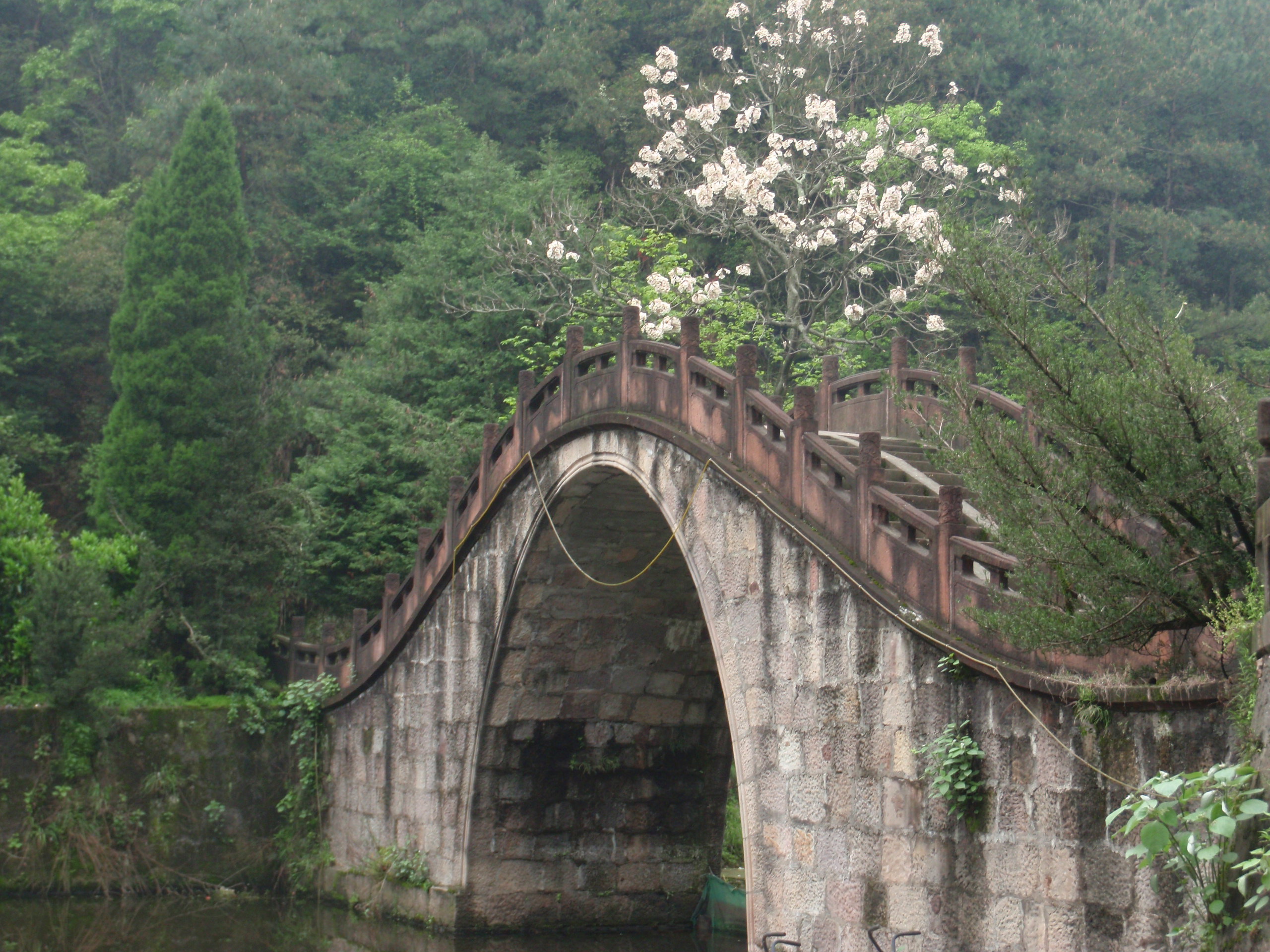
I went for a stroll today through a random park and ended up finding a zoo.Huh? It had a bear and deer and peacocks and one very cranky monkey. I was just expecting trees. And then I found a beautiful heritage bridge.
So, the language barrier, it aint so bad, I reckon.

Splendour and smog in Shanghai

I can’t quite see the tops of some of the towers on the other side of the river, such is the thick, eerie quality of the smog in this city. Also, I had expected to see some old Chinese folk practising Tai Chi as I strolled along the famous Bund. But as dorm-mate had warned me earlier, “the Bund is pretty. but you’re just walking along the river.”
Shanghai, on first impressions, did not overwhelm me with character or bustle, just with its size.
I made my way around the bohemoth, however, and found some quaint charms.
One of the highlights was strolling along the Bund, very aimlessly, breathing in the thick pollution and admiring the stunning colonial buildings clashing with the stark modernisation on the other side of the river. By itself, this could appear a rather dull pursuit and indeed it was not superbly exciting.
The best part of this morning walk was being snapped out of a reverie by a group of Chinese tourists waving their hands in such an animated fashion I thought one of them may have just laid an egg. A few blank looks, smiles and hand gestures later I realised they wanted a photo with me. Sure, I thought, flattered.
We passed their cameras around snapping as if the camera had just an inch of battery left. Then I bought out my camera to grab a photo of them and I thought their faces may just burst from their exuberant grins.
I walked away thinking Shanghai might not be so bad, after all.
Then, it happened again. Cameras were passed around like damper at a campfire. How great is this, I thought as I took on my new role of mini-celebrity.
And then, it happened again. My head swelled a little more.
Throughout the day I clocked five experiences of photos with Chinese tourists and I really have no idea what’s going on with the combined tourist shost, but I love it. The sense of community and knocking down of cultural barriers is beautiful.
However, I was more than a little perturbed when my mate told me later on, rather awkwardly, that my fly was undone. Oh dear!